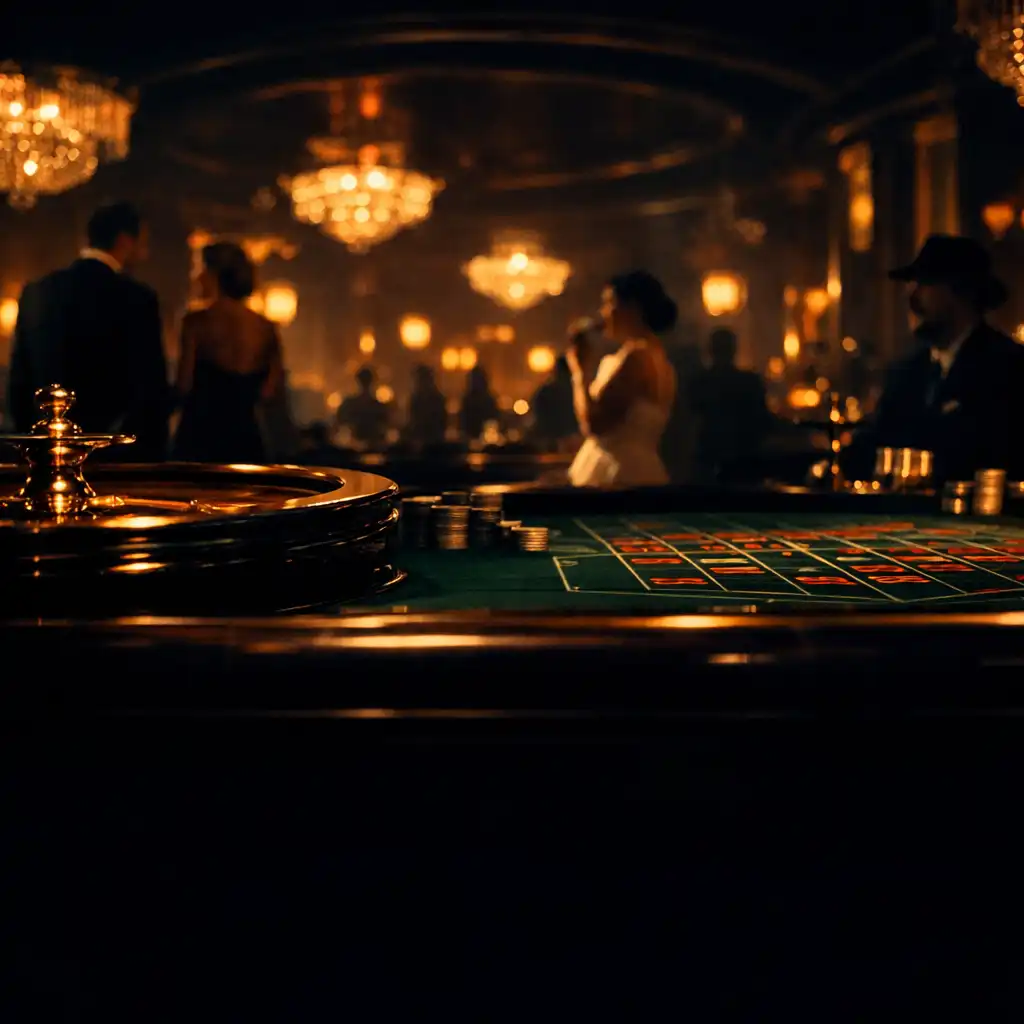
A grand casino interior at night with a roulette table in the foreground and elegant patrons in the background, bathed in warm amber and deep navy light

Casino Cinema

Casino Cinema: The Moral Arena of Modern Film

Casino Cinema is not a genre of gambling; it is a genre of consequence. These films use the casino as a stage for human ambition, fear, and fate, turning roulette wheels and poker tables into instruments of drama.

The casino setting provides a closed world with its own rules, stakes, and rituals. Films in this category often explore themes of luck, skill, obsession, and moral compromise. The category spans noir classics, heist thrillers, character studies, and contemporary dramas.


What We Mean by Casino Cinema

Casino Cinema encompasses any film where a casino, gambling house, or game of chance serves as a central setting or narrative engine. It is not limited to films about professional gamblers; it includes heist films set in casinos, character dramas about addiction, and stories where a single bet changes everything. The casino is treated as a microcosm of society, with its own hierarchies and codes.

The category includes poker films, roulette movies, blackjack dramas, and broader gambling stories. Our coverage prioritises storytelling, performance, and film history over gambling strategy or promotion. Film Story Journal organises this material into Reviews, Film Stories, Characters, Casino Cinema, Poker on Film, Roulette Movies, Behind-the-Scenes Facts, and Thematic Essays, so readers can move from a single film to a wider cultural argument without losing the thread.


The Casino as Moral Arena

Theme 01

Luck, Skill, and the Illusion of Control

Casino films often blur the line between luck and skill. Characters believe they can beat the house through intelligence or intuition, but the films usually reveal the house always wins—or that the real cost is not financial but moral. Poker films often focus on reading opponents, but the deeper conflict is self-deception. Roulette movies use the wheel as a symbol of pure chance, stripping characters of agency. Blackjack dramas explore the tension between mathematical systems and human fallibility.
Theme 02

The Architecture of Temptation

Casinos are designed to disorient and seduce. Filmmakers use this architecture—the lack of clocks, the labyrinthine layouts, the constant sensory stimulation—to externalise characters' inner turmoil. The visual language of casino films often includes mirrors, neon, and endless corridors. Sound design plays a key role: the clatter of chips, the spin of the wheel, the murmur of the crowd. The casino becomes a character itself, indifferent to human outcomes.

Theme 03

The Price of the Big Score

Many casino films revolve around a heist or a single high-stakes game. The narrative tension comes not from whether the characters will win, but from what they will lose in the process—relationships, integrity, or their lives. Heist films set in casinos often use the elaborate security as a metaphor for moral barriers. The 'one last job' trope is common, highlighting the addictive pull of risk. Endings are frequently bittersweet, with victory hollowed by personal cost.


Signature Films and Moments

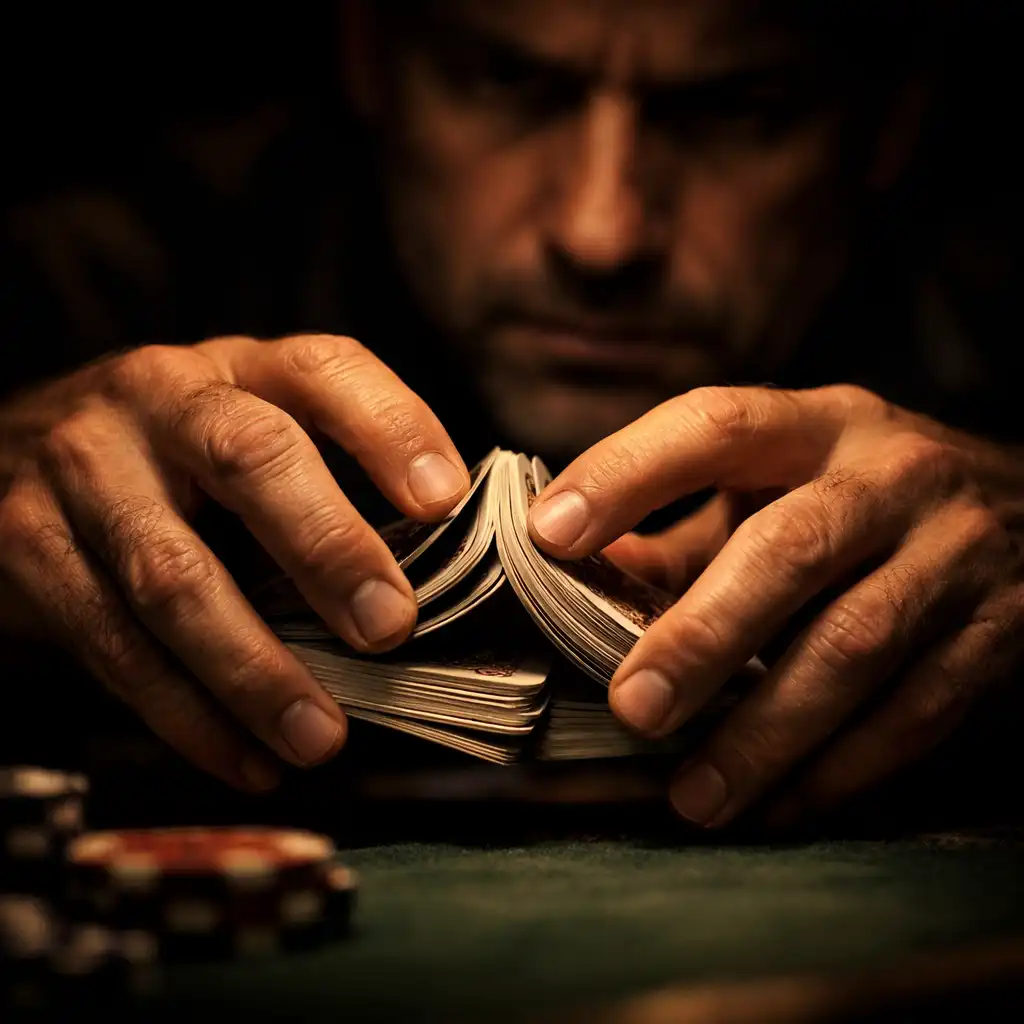
Close-up of a man's hands shuffling cards at a dimly lit poker table, his tense face partially visible in the background

Film Spotlight

The Hustler's Desperation

In films like The Hustler, the pool hall is replaced by the poker table, but the psychology is the same: a talented but flawed protagonist seeks validation through victory, only to discover that winning is not the same as being whole. The film's use of close-ups on faces and hands intensifies the psychological drama. The mentor-student relationship becomes a vehicle for exploring pride and self-destruction. The ending leaves the protagonist with a hollow victory, setting a template for later casino films.

The Hustler (1961) is a classic film about pool hustling, often cited as a precursor to modern gambling dramas.

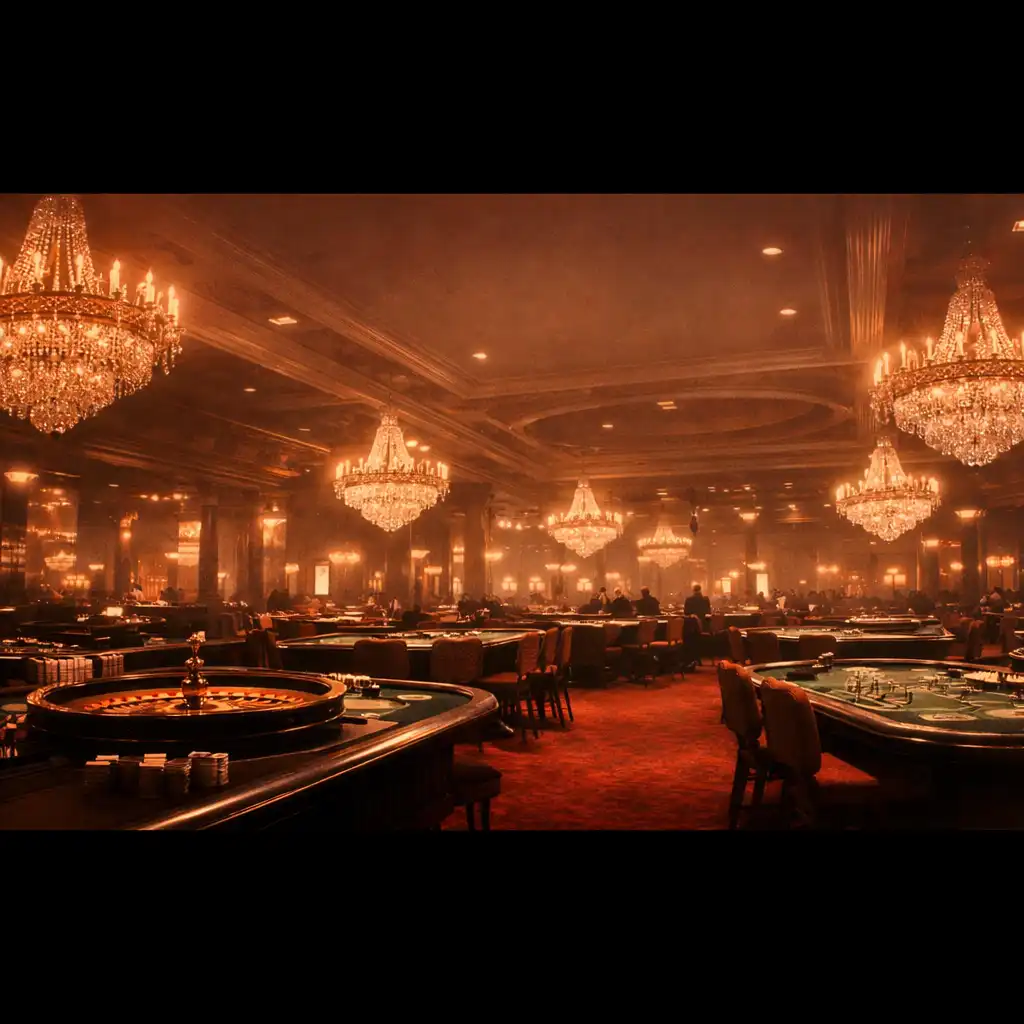
A grand 1970s casino interior with chandeliers, red carpets, and rows of roulette and blackjack tables

Film Spotlight

The High-Stakes Heist

Ocean's Eleven and its successors turned the casino heist into a genre of its own, blending glamour, wit, and intricate plotting. The casino becomes a fortress to be outsmarted, and the audience delights in the cleverness of the scheme. The ensemble cast and slick direction create a tone of effortless cool. The heist mechanics are less important than the character interactions and the pleasure of watching a plan come together. The casino setting provides a built-in sense of spectacle and risk.

Ocean's Eleven (2001) is a remake of the 1960 film and spawned a successful franchise.

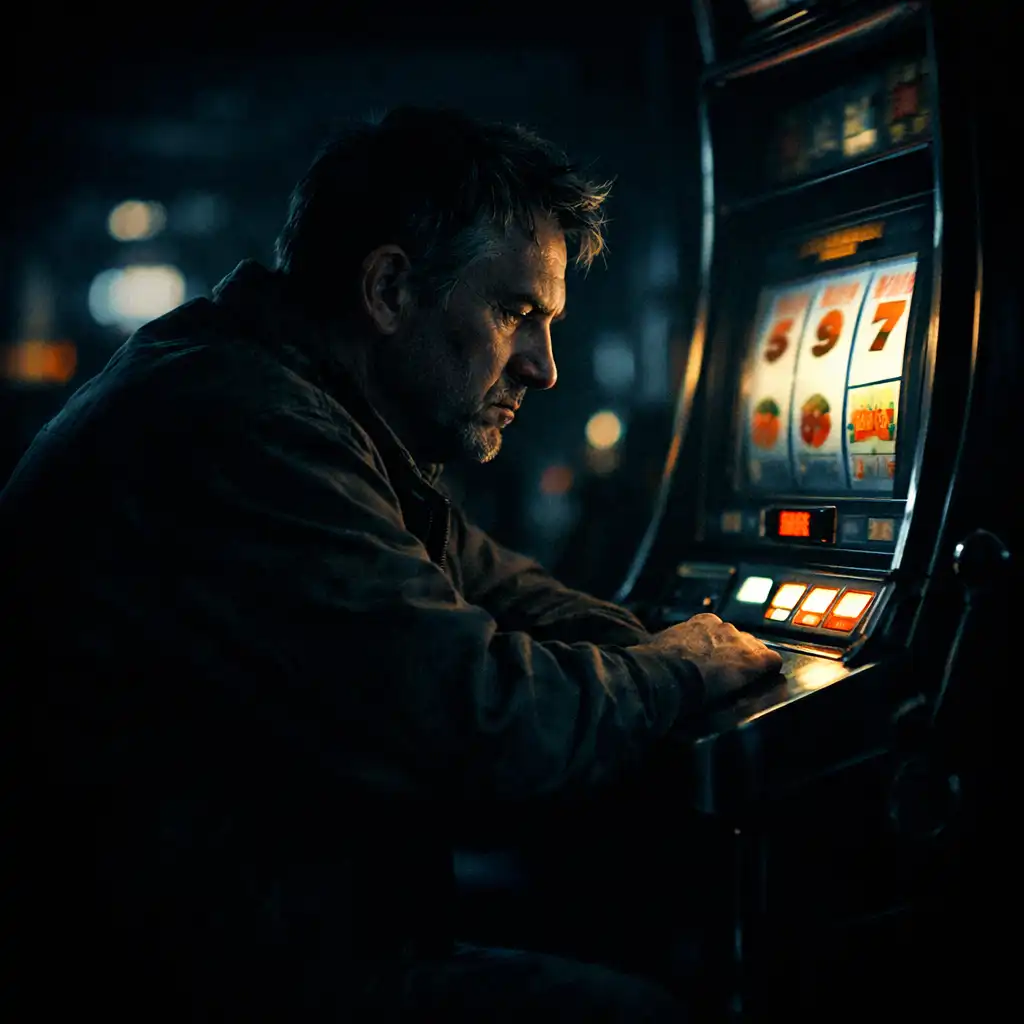
A solitary man sitting at a slot machine in a dimly lit casino, his face illuminated only by the machine's glow

Film Spotlight

The Addiction Drama

Films like Owning Mahowny or The Gambler strip away the glamour to show the devastating reality of compulsive gambling. These stories are less about the casino's allure and more about the protagonist's internal collapse. The camera often stays close to the protagonist, emphasising isolation. The casino's noise and colour become oppressive rather than exciting. The narrative arc is a downward spiral, with brief moments of hope that are quickly extinguished.

Owning Mahowny (2003) is based on a true story of a bank manager who embezzled funds to feed his gambling addiction.

"In the casino, the only thing more dangerous than losing is winning."


The Psychology of the Player

Archetype

The Obsessive

Driven by a need to prove something—to themselves, to a rival, or to the world—the obsessive gambler is a tragic figure. Their intelligence and skill are undermined by an inability to walk away. Often portrayed as a genius with a fatal flaw, the narrative tracks their gradual loss of control. They are sympathetic but ultimately self-destructive.

Archetype

The Cool Professional

The professional gambler or con artist operates with detachment and discipline. They treat the casino as a workplace, not a playground, and their success depends on emotional control. Often the protagonist in heist films, their coolness is both a strength and a mask for deeper vulnerabilities. They frequently face a moral choice that tests their detachment.

Archetype

The Innocent

The innocent is drawn into the casino world by circumstance—a debt, a mistaken identity, or a loved one's involvement. Their journey is one of corruption or survival. Often serving as the audience surrogate, their moral compass is tested by the casino's amorality. They may emerge changed, either hardened or redeemed.


Visual Language of the Casino Film

Light and Shadow

Casino films often employ high-contrast lighting to create a sense of moral ambiguity. Neon signs and table lamps cast pools of light, while shadows hide intentions. The camera moves through the casino like a predator, tracking characters through a maze of temptation. Film noir influences are strong, especially in classic gambling films. Modern casino films use colour grading to evoke a slightly unreal, dreamlike quality. Close-ups on cards, chips, and faces heighten tension.

A roulette wheel in sharp focus with blurred casino lights in the background, dramatic spotlight on the wheel

Sound and Silence

The casino's soundscape—the clatter of chips, the spin of the roulette wheel, the murmur of the crowd—is a crucial storytelling tool. Filmmakers often use sudden silence to signal a moment of high stakes, isolating the protagonist in their decision. Diegetic sound is used to create immersion. Music is often jazzy or suspenseful, reflecting the era and tone. Silence can be more powerful than noise in key moments.


From Page to Screen

Literary Origins

Many classic casino films are adapted from novels and non-fiction accounts. These sources provide rich psychological depth and detailed settings that translate well to the screen. The Hustler was based on a novel by Walter Tevis. Casino (1995) drew from Nicholas Pileggi's non-fiction book about the mob in Las Vegas. Adaptations often heighten the visual spectacle while preserving the moral complexity.

Casino (1995) was directed by Martin Scorsese and starred Robert De Niro, Sharon Stone, and Joe Pesci.

True Stories

Real-life gambling stories have inspired some of the most compelling casino films. The tension between fact and fiction adds an extra layer of fascination for audiences. Owning Mahowny is based on the true story of Brian Molony, a bank manager who embezzled millions. 21 (2008) dramatises the MIT blackjack team's card-counting exploits. Molly's Game (2017) tells the story of Molly Bloom's high-stakes poker games.

21 (2008) is based on the book Bringing Down the House by Ben Mezrich.


The Global Casino

American Glamour and Grit

American casino films often oscillate between the glamour of Las Vegas and the gritty underworld of mob-run casinos. The setting is both a playground and a battleground. Las Vegas is a recurring backdrop, symbolising excess and opportunity. Films like Casino and The Godfather Part II explore the criminal underbelly. The American Dream is a common theme, with the casino as its ultimate test.

European Elegance

European casino films often emphasise elegance, sophistication, and a sense of old-world intrigue. The casino is a place of refined vice, where manners mask darker motives. Monte Carlo and other European casinos are frequent settings. Films like The Good Thief and Croupier bring a literary sensibility. The tone is often more melancholic and philosophical.

Asian High-Stakes Drama

Asian cinema has produced some of the most intense gambling films, often focusing on high-stakes games and the honour codes that surround them. The casino becomes a stage for epic confrontations. Hong Kong films like God of Gamblers blend action and gambling. Japanese and Korean films explore the psychological toll of addiction. The visual style is often more stylised and kinetic.


Further Exploration

Casino Cinema is just one lens through which Film Story Journal explores gambling-related films. Dive deeper into specific subgenres and thematic essays.

A Note on Our Approach

Film Story Journal is a cultural publication, not a gambling resource. We explore casino films for their storytelling, performances, and historical significance. We do not provide gambling advice or promote gambling activities. If you or someone you know is affected by problem gambling, please seek appropriate support. The publication is based in Sydney, Australia. All content is editorial and educational in nature. We encourage responsible engagement with the subject matter.